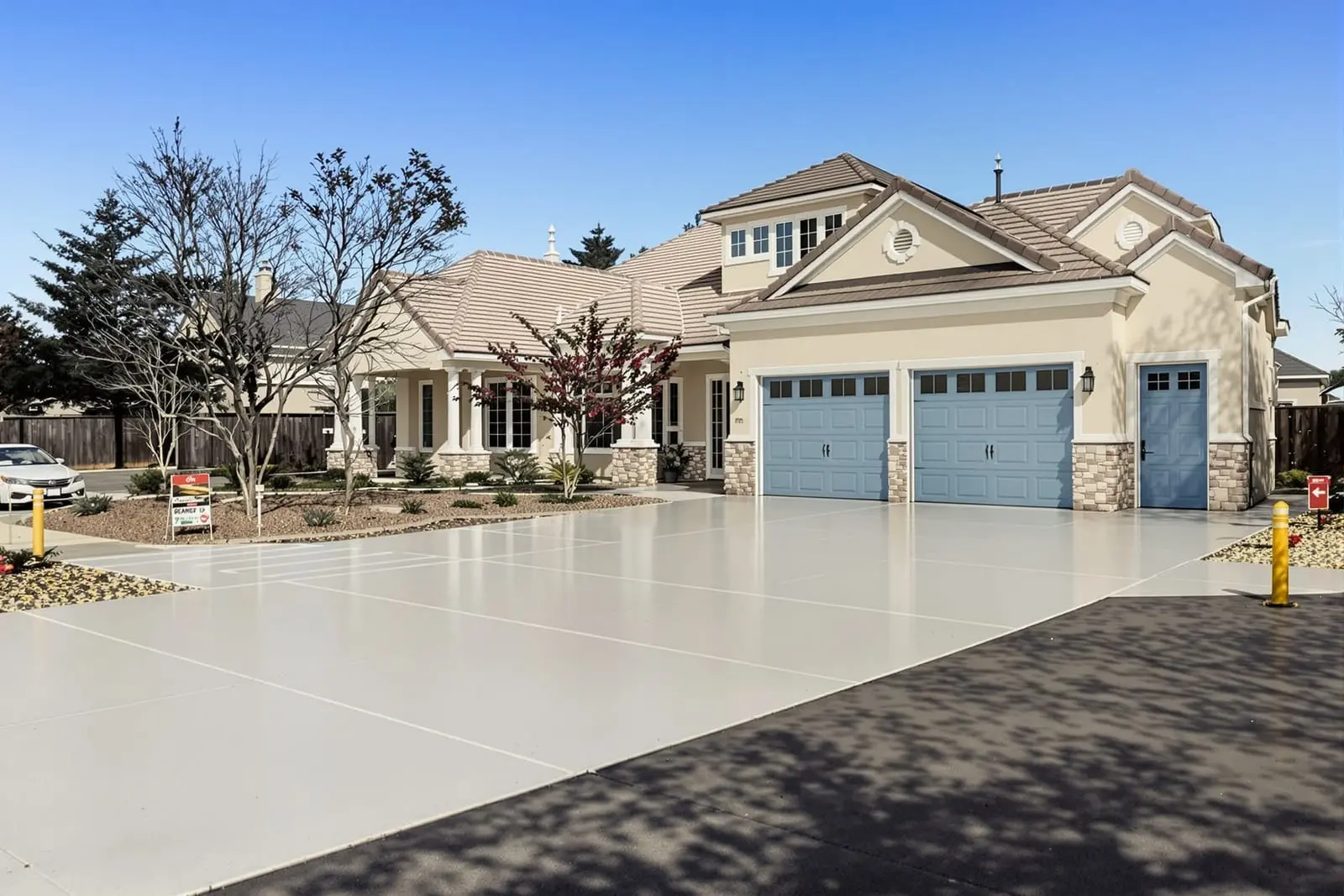
Support your business operations with durable commercial concrete paving in Orlando, FL. We pour access drives, loading areas, and parking surfaces built for heavy traffic. Our team coordinates scheduling and phasing to minimize disruption to your customers and staff.
Primetime Concrete Orlando provides professional commercial concrete paving throughout Orlando, FL and the surrounding area. Our licensed, insured crew delivers safe, clean, on-time work with a free estimate before anything begins. Call (321) 352-4372 or request your free quote.
Commercial concrete paving that holds up to Orlando use and weather
Commercial concrete paving in Orlando has to deal with three things every day: heavy vehicles, intense sun, and fast-moving thunderstorms. At Primetime Concrete Orlando, we build pavements around those realities, not off a one-size-fits-all plan pulled from another state.
Before we quote a job, we walk the site and look at what will really be using the pavement. A restaurant drive-thru with delivery trucks needs different slab thickness and reinforcement than a medical office parking lot or an apartment complex driveway. We ask about garbage truck routes, loading dock use, and where delivery box trucks usually park or turn. These details are what prevent early cracking, tire ruts, and broken edges in a few years.
We also check existing grades and drainage. In Orlando, afternoon storms can drop a lot of water quickly, and if that water cannot escape your parking lot, you end up with ponding, slippery surfaces, and damage at joints. Our crews shoot elevations, map where water is flowing now, and plan slopes that move water away from building entrances, ADA ramps, and walkways while still meeting code and accessibility requirements.
Primetime Concrete Orlando uses mix designs that handle both high heat and moisture. Cheaper mixes can weaken if too much water is added on site, which is common when crews are trying to keep concrete workable in the afternoon sun. We control that by ordering mixes designed for our climate, training our finishers to work efficiently, and using admixtures when needed so we do not water down the concrete just to make it easier to place.
How we install commercial concrete paving step by step
A durable commercial concrete pavement starts in the dirt, not at the surface. On a new build, we begin with excavation and proof-rolling. A heavy roller or loaded truck is driven over the subgrade to reveal soft spots. Where the soil pumps or deflects, we undercut and replace it with compacted base material so the slab is not sitting on pockets of weak ground.
On replacements, we sawcut and remove the old pavement in sections to protect any nearby structures, curbs, or utilities. Often in Orlando, we find thin concrete over uncompacted fill or random patches from past repairs. We remove unstable layers and rebuild the base so new concrete will not mirror old failures.
Next comes base preparation. For most commercial concrete paving in Central Florida, we use a compacted crushed concrete or lime rock base, typically 4 to 8 inches thick depending on load and soil conditions. We compact in lifts with a plate compactor or roller, then check density and grade. Even a strong concrete slab will crack and settle if the base is loose or uneven.
Formwork and reinforcement follow. We set forms for correct elevations, slopes, and thickness. For parking lots and drive lanes, steel reinforcement is usually either rebar in a grid pattern or welded wire mesh, depending on design and budget. For dumpster pads, drive-thru lanes, and loading zones, we often bump thickness up to 6 inches or more and tighten rebar spacing to handle concentrated wheel loads and the twisting action of trucks.
Once forms, base, and steel are ready, we coordinate concrete delivery times around weather and traffic. In Orlando heat, we avoid long midday placements for large pours when possible. Our crew places the concrete, uses vibrators in thicker sections or around rebar to reduce voids, then strikes off and bull floats the surface. After that, we cut in control joints at planned locations so the slab cracks in those lines instead of randomly across your drive lanes or parking spaces.
Finishes, joints, and curing that make a daily-use surface last
Commercial concrete paving is more than just a gray surface. The finish and joint layout affect safety, appearance, and lifespan.
For most parking lots and drive aisles, we use a broom finish. This gives enough texture so vehicles and pedestrians have good traction even when surfaces are wet from afternoon storms. Around storefronts and ADA paths, we carefully match finish and slopes to accessibility requirements so wheelchairs and walkers can move safely without slippery surfaces.
Joint planning is a real part of the design, not an afterthought. In Orlando, temperature swings and moisture changes cause concrete to expand and contract. We sawcut control joints in a grid pattern sized to slab thickness and layout, usually within 24 hours of placement so the concrete does not crack on its own first. At construction joints where one pour stops and another starts, we use dowels when needed so sections move together and heavy wheels do not break the edge.
Curing is often skipped by low-cost contractors, but it matters even more in Florida heat. We apply curing compound or use other curing methods so the surface does not dry out faster than the interior. Proper curing reduces surface dusting and early cracking, and helps your pavement achieve its designed strength. On higher-end commercial concrete paving projects, we may also recommend a clear sealer after the curing period to reduce staining from oils and improve cleanability in high-visibility front areas.
Line striping and traffic markings usually follow after the concrete has gained sufficient strength. We coordinate with striping vendors or can arrange it as part of a turnkey package so your lot is not sitting unmarked longer than necessary.
Costs, options, and what drives your commercial concrete paving budget
Business owners in Orlando often ask why different quotes for commercial concrete paving are so far apart. The main drivers of cost are slab thickness, reinforcement, base preparation, and access.
Slab thickness is tied directly to what will drive or park on the surface. A light-use employee lot might be 4 inches thick, while areas with frequent garbage truck access or delivery semis often need 6 inches or more. It costs more up front, but it is usually cheaper than rebuilding failed sections every few years.
Reinforcement choice also affects price. Adding rebar on tighter spacing, or upgrading from wire mesh to rebar in critical areas like loading zones or dumpster pads, raises material and labor costs but significantly increases performance. At Primetime Concrete Orlando, we explain where upgraded reinforcement genuinely makes sense and where a standard design is adequate so you can put money where it matters most.
Base work is another major variable. If a site has poor or saturated soil, which is common in lower-lying parts of Orlando, we may recommend a thicker base or more extensive undercutting. This is not something you can see once the pavement is in place, but it has a bigger impact on longevity than almost anything else.
Access and phasing also influence cost. A shopping center that has to stay open every day will need phased work, night pours, or weekend scheduling so customers and deliveries can still reach businesses. That kind of staging takes more time and traffic control planning, but for many Orlando properties, it is the only practical way to upgrade paving without hurting revenue.
We provide itemized proposals so you can see how concrete thickness, base depth, and reinforcement choices affect price. That way, you are not just comparing a lump sum number against another contractor, you are comparing what you are really getting in the ground.
Common issues in Orlando and how we prevent or fix them
Orlando commercial properties see a few repeat problems with concrete paving: cracked dumpster pads, settled sections holding water, and broken edges where trucks cut corners. Primetime Concrete Orlando approaches each of these with specific solutions instead of patching over symptoms.
Dumpster and compactor pads fail when they are poured to the same specs as regular parking stalls. We typically thicken these slabs, upgrade rebar, and often tie them into adjacent pavements with dowels. We also look at how the garbage truck actually approaches and turns, not just what the plan shows, since wheel paths and outriggers can put stress in different places than expected.
Ponding water is another Orlando issue. Older lots often have sections that have settled near catch basins or low spots that collect stormwater, leading to algae buildup and surface deterioration. When we replace or repair these areas, we correct the grades in the base and sometimes adjust inlet heights so water moves off the surface instead of sitting for hours after every storm.
Broken edges typically show up where delivery trucks drive off the edge of pavement to make tight turns. To handle this, we may widen radii, add thicker edge bands, or install concrete flares where vehicles actually travel. Addressing how trucks move on your site is usually more effective than simply thickening the whole lot.
When we are called to repair existing commercial concrete paving, we look for underlying causes before we propose any fix. That might involve checking nearby irrigation overspray that keeps soil saturated, looking for tree roots under sidewalks, or confirming that drainage structures are not clogged or set too high. Fixing the root problem prevents you from paying for the same repair twice.
“
Professional commercial concrete paving, done right the first time, quality materials, honest pricing, and results that last.
Primetime Concrete Orlando
Commercial Concrete Paving Across Our Service Area